10 October 2026
Recreate Behavioral Health of Ohio: Drug Addiction Treatment Near Columbus
Presented by @manuelnioj461
Drug addiction treatment is rarely a single event. For most people, it is a sequence of decisions made under pressure, often after months or years of strain on health, family, work, finances, and trust. A person may need medical support to stop using safely, then a structured place to stabilize, then outpatient care to practice recovery while returning to daily life. Some people also need treatment for depression, anxiety, trauma, or other mental health concerns that have been running alongside substance use. When care is fragmented, people can fall through the gaps.
Recreate Behavioral Health of Ohio, also known as Recreate Ohio, is located in Gahanna, just outside Columbus. The facility is part of Recreate Behavioral Health Network and describes its Ohio program as offering a full continuum of care, including detox, residential or inpatient rehab, and outpatient treatment. For individuals and families in central Ohio who are trying to understand what meaningful drug addiction treatment should look like, that continuum matters. It can reduce the need to start over with a new provider at each stage and may help the clinical team adjust care as a person’s needs change.
Ohio’s treatment landscape also has a legal and clinical framework behind it. State law requires a community-based continuum of care for opioid and co-occurring drug addiction that includes ambulatory and sub-acute detoxification, non-intensive and intensive outpatient services, medication-assisted treatment, peer support, residential services, recovery housing, and multiple pathways to recovery. Ohio treatment providers that deliver substance use disorder treatment must be certified by the Ohio Department of Mental Health and Addiction Services under state law. That framework reflects something experienced clinicians see every week: recovery works best when people can access the right level of care at the right time, rather than being forced into a one-size-fits-all model.
Why location near Columbus can matter
Gahanna sits close enough to Columbus to be practical for many central Ohio families, yet it is outside the immediate center of the city. That proximity can be important. Loved ones may need to participate in family therapy, bring personal items, coordinate insurance or work documentation, or help plan the next phase of care. A facility near Columbus can make those logistics more manageable than treatment several hours away.
At the same time, a little distance from a person’s usual daily environment can be useful. Early recovery can be vulnerable. Familiar routes, people, and habits may carry strong associations with substance use. A treatment setting outside the immediate home routine can create room for stabilization without requiring a person to leave the region altogether. For some, staying near central Ohio preserves family involvement and continuity with local supports. For others, it may be close enough to feel accessible but separate enough to focus.
There is no perfect geography for drug addiction treatment. Some people benefit from being far from triggers. Others need to remain close because of children, medical needs, legal obligations, employment issues, or family responsibilities. The best choice depends on risk, support, motivation, health status, and the level of structure required. What matters is that location serves the treatment plan, not the other way around.
The value of a full continuum of care
The phrase “continuum of care” can sound clinical, but it describes a practical reality. People do not all enter treatment at the same point, and they do not all progress at the same pace. Someone using opioids daily may need detox before they can fully participate in therapy. Someone who has completed detox may still be too unstable for outpatient care and need residential treatment. Someone who has completed residential treatment may be ready for outpatient services but still need structured therapy, medication support, and accountability.
Recreate Ohio says it offers detox, residential or inpatient rehab, and outpatient treatment. A full continuum can help match care intensity to the person’s current needs. It can also create smoother transitions. In addiction treatment, transitions are high-risk moments. Leaving detox without a next step, discharging from residential care without outpatient follow-up, or returning home without family involvement can expose a person to relapse risk before new coping skills have had time to take root.
A continuum does not guarantee success, and no ethical provider should imply that it does. Drug addiction is a chronic and treatable condition for many people, but progress often includes setbacks, adjustments, and renewed engagement. The strength of a continuum is that it gives the clinical team more ways to respond. If a person needs more structure, care can intensify. If a person is ready for more independence, care can step down. If a co-occurring mental health issue becomes more visible after substance use stops, treatment can adapt.
Detox is not the same as treatment
Detoxification is often the first urgent need, especially when a person is physically dependent on substances. It can be necessary for safety, comfort, and medical monitoring. But detox alone is not the same as drug addiction treatment. Detox helps a person stop using and manage withdrawal. Treatment addresses the patterns, risks, beliefs, relationships, mental health symptoms, and practical barriers that influence whether recovery can be sustained.
This distinction matters because families often hope detox will “reset” the situation. It may begin the reset, but it rarely completes it. A person may feel clearer after several days, but that clarity can be fragile. Cravings, insomnia, shame, anxiety, unresolved trauma, and pressure from old relationships may return quickly. Without continued care, the period after detox can be dangerous, particularly for people whose tolerance has changed.
Ohio’s required continuum of care recognizes detox as one part of a broader system, not the whole system. Recreate Ohio’s stated offering of detox, residential or inpatient rehab, and outpatient treatment fits that broader concept. The question for any person entering care is not only, “How do I get through withdrawal?” It is also, “What happens the day after detox ends, and who is helping me plan for that?”
Residential treatment and the need for structure
Residential or inpatient rehab provides a level of structure that outpatient care cannot. For people whose substance use has become intertwined with daily routines, relationships, and living environments, structure can be therapeutic in itself. Meals, groups, individual sessions, clinical expectations, rest, and peer interaction create a rhythm that contrasts with the instability of active addiction.
Recreate Ohio says its facility offers residential or inpatient rehab and also provides primary mental health services in a residential treatment setting. That combination is significant for people whose drug addiction does not exist in isolation. Depression, anxiety, trauma responses, mood instability, grief, and relationship distress can all complicate recovery. Sometimes these issues were present before substance use escalated. Sometimes they worsened because of substance use. Sometimes they become easier to identify only after a person is no longer intoxicated or in withdrawal.
Residential care can give clinicians time to observe patterns that might not appear during a brief appointment. Does the person shut down during conflict? Do cravings spike after family calls? Does anxiety drive avoidance? Is sleep improving or worsening? Does the person participate in group therapy but struggle in individual sessions? These details help shape treatment. They also help the person begin to understand their own patterns without the constant noise of crisis.
Residential treatment is not a retreat from responsibility. When done well, it is preparation for responsibility. The goal is not to create a bubble that cannot be replicated. The goal is to help a person stabilize enough to face real life with better tools, stronger supports, and a clearer plan.
Outpatient treatment as the bridge back to daily life
Outpatient treatment is where recovery often meets reality. A person may be sleeping at home, managing work or family duties, and returning to the same roads, phones, bills, and relationships that existed before treatment. That can be both encouraging and difficult. Outpatient care allows people to practice recovery skills while still receiving professional support.
Recreate Ohio says it offers outpatient treatment. Within a continuum, outpatient care can serve several roles. For some people, it may be the appropriate starting point if they do not need detox or residential support. For others, it may be the next step after a higher level of care. The intensity can vary depending on clinical need, and Ohio’s continuum recognizes both non-intensive and intensive outpatient services as part opioid recovery programs of a community-based response to drug addiction and co-occurring concerns.
The bridge metaphor is useful here. A bridge must connect both sides. If outpatient care is too detached from real life, it can feel theoretical. If it is too loose, people may not get enough support. Strong outpatient treatment helps people examine what happened during the week, anticipate risks, repair relationships, maintain medication plans when appropriate, and continue therapy work that began in residential treatment.
Therapies that address more than substance use
Recreate Behavioral Health Network says treatment at its Ohio facility may include cognitive behavioral therapy, dialectical behavior therapy, EMDR, medication-assisted treatment, individual therapy, group therapy, family therapy, and couples therapy. Each of these approaches can serve a different function in the recovery process.
Cognitive behavioral therapy, often called CBT, helps people identify the connection between thoughts, emotions, and behaviors. In drug addiction treatment, that may mean recognizing the thought patterns that precede use, such as “I already ruined the day,” “I cannot handle this feeling,” or “No one will know.” CBT is practical because it does not stop at insight. It asks what a person can do differently when those thoughts arise.
Dialectical behavior therapy, or DBT, is often associated with skills for emotional regulation, distress tolerance, mindfulness, and interpersonal effectiveness. Those skills can be highly relevant in addiction treatment. Many people use substances not because they lack information about risk, but because intense emotion overwhelms their ability to choose differently in the moment. DBT-style skills can give people more options during those moments.
EMDR, or eye movement desensitization and reprocessing, is commonly associated with trauma treatment. Recreate states that EMDR may be part of treatment at the Ohio facility. Trauma and drug addiction can be closely linked, though not every person with addiction has trauma and not every trauma survivor develops addiction. When trauma is part of the clinical picture, addressing it carefully can matter. Timing is important. Some people need stabilization before deeper trauma work. Others may be ready sooner. Good clinical judgment is essential.
Individual therapy gives space for privacy and depth. Group therapy offers peer feedback and reduces isolation. Family and couples therapy can address the relational damage that often surrounds addiction. These formats are not interchangeable. A person may disclose something individually that they are not ready to discuss in group. A family may need guided conversations that would be unproductive or harmful without a clinician present. Couples may need help separating accountability from punishment and support from enabling.
Medication-assisted treatment and safe prescribing
Medication-assisted treatment is part of Ohio’s recognized continuum for opioid and co-occurring drug addiction, and Recreate states that medication-assisted treatment may be included at the Ohio facility. MAT is sometimes misunderstood. It is not simply “replacing one drug with another,” a phrase that has discouraged many people from receiving evidence-informed care. In appropriate cases, medication can reduce cravings, support stability, and lower risk while a person engages in therapy and recovery work.
Medication decisions should always be individualized. The right approach depends on the substance involved, medical history, psychiatric symptoms, previous treatment attempts, current risks, and patient preference. Some people do well with medication support. Others may not need it or may not be appropriate candidates. The key is careful assessment rather than ideology.
Ohio also operates OARRS, the statewide electronic database for controlled-substance dispensing information. OARRS supports safe prescribing and helps connect people at risk of substance use disorder to resources. In a state heavily affected by opioid addiction and other substance-related harms, systems like OARRS can help clinicians see patterns that might otherwise be missed. It is one part of a broader safety net, not a substitute for treatment, but it reflects the importance of responsible prescribing and coordinated care.
Treating co-occurring mental health concerns
Many people enter drug addiction treatment with more than one problem, even if substance use is the most visible crisis. Anxiety may have narrowed their life. Depression may have made daily responsibilities feel impossible. Trauma symptoms may have kept the nervous system on high alert. Relationship conflict may have become constant. Sleep may be poor. Shame may be intense. If these issues are ignored, recovery can feel like a person is being asked to give up their main coping mechanism without receiving another way to survive.
Recreate Ohio says it offers primary mental health services in a residential treatment setting. That is relevant because co-occurring care requires more than asking a few screening questions. Substance use and mental health symptoms can imitate, mask, or intensify each other. A person may look depressed during withdrawal but improve with stabilization. Another person may continue to show major depressive symptoms after detox and need focused mental health treatment. Someone may describe panic attacks but also be experiencing substance-induced anxiety. Sorting this out takes time, observation, and clinical skill.
The order of treatment also matters. Some mental health work can begin immediately. Other work may need to wait until the person is medically and emotionally stable. For example, a person with trauma symptoms may benefit first from grounding skills, sleep stabilization, and relapse prevention before engaging in deeper trauma processing. Another person may need urgent psychiatric attention because mood symptoms are severe. A strong program does not force every patient through the same sequence. It adjusts.
Holistic supports can strengthen recovery when they are integrated well
Recreate states that its Ohio facility may provide holistic supports such as yoga and mindfulness, art therapy, adventure therapy, equine therapy, Reiki, acupuncture, chiropractic care, fitness and wellness activities, and nutrition education. These services can be valuable when they complement clinical treatment rather than replace it.
Addiction affects the body as well as the mind. People often arrive in treatment depleted. Sleep has been disrupted. Nutrition may be poor. Movement may have disappeared or become irregular. The body may be carrying tension, pain, or exhaustion. Practices such as mindfulness, fitness, and nutrition education can help people rebuild awareness of physical needs and stress signals. Art therapy may help some people express experiences they struggle to put into words. Adventure or equine therapy may create opportunities to practice trust, frustration tolerance, boundaries, and nonverbal awareness.
There are trade-offs. Not every holistic support fits every person. Someone in early withdrawal may not be ready for physically demanding activity. Someone with trauma may need careful preparation before body-based practices. Someone skeptical of holistic modalities may engage better when the purpose is explained plainly and without exaggeration. The strongest use of these supports is practical: they help people learn how to regulate, reconnect, and build a life that does not revolve around using.
Questions families should ask before admission
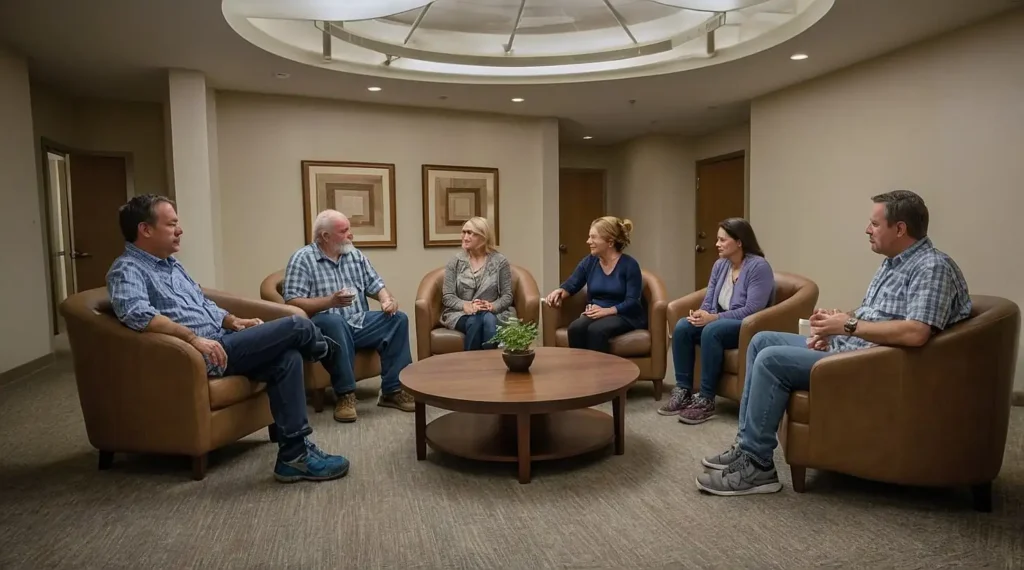
Families often call treatment centers when they are tired, frightened, and unsure what to believe. They may have heard promises before. They may be trying to act quickly because the person is finally willing to accept help. Even in urgent situations, a few focused questions can clarify whether a program fits the person’s needs.
- Is the provider certified to deliver substance use disorder treatment in Ohio?
- Which levels of care are available at the Ohio location, and how is placement determined?
- How does the program handle co-occurring mental health concerns during treatment?
- When is medication-assisted treatment considered, and who evaluates that need?
- What does the transition plan look like after detox or residential care?
These questions are not meant to create an adversarial conversation. They help families listen for specificity. A thoughtful admissions or clinical team should be able to explain the process in ordinary language, including what they can provide, what they cannot provide, and when another setting may be more appropriate.
What a realistic path through treatment may look like
A common mistake is imagining treatment as a straight line. A person enters detox, completes residential treatment, attends outpatient sessions, and never struggles again. That does happen for some people, but many recoveries are less tidy. Cravings may return. Family conflict may flare. A person may step down to outpatient care and realize they need more support than expected. Another person may do well clinically but struggle with loneliness or employment stress.
A realistic path allows for adjustment without treating every difficulty as failure. If someone completes detox and is still highly unstable, residential care may be the safer next step. If someone is doing well in residential treatment, outpatient care can help maintain momentum. If outpatient care reveals new risks, the treatment plan may need to change. That flexibility is one reason a continuum matters.
Consider a person from the Columbus area who has been using opioids and stimulants, has strained family relationships, and reports anxiety that spikes at night. Detox might address the immediate physical dependence and withdrawal concerns. Residential treatment could then create a structured environment to assess anxiety, begin therapy, consider whether medication-assisted treatment is appropriate, and involve family in a healthier conversation. Outpatient care could support the return home, where the person must manage old triggers and rebuild daily routines. This example is not a promise of any particular outcome. It simply shows why different levels of care exist.
Family involvement without control
Families carry a heavy burden in addiction. They may have found substances, paid debts, taken late-night calls, cared for children, or watched someone they love become unrecognizable. By the time treatment begins, relatives may feel both hopeful and angry. Those emotions can coexist.
Recreate states that family and couples therapy may be included in treatment at the Ohio facility. When clinically appropriate, these therapies can help families move from crisis reaction to clearer communication. Family work may address boundaries, trust, relapse warning signs, support plans, and old wounds. Couples therapy may address secrecy, fear, resentment, and the difference between supporting recovery and monitoring every move.
Family involvement has limits. Treatment cannot be controlled from the outside. A loved one cannot do the internal work for the person with addiction. Families also need to avoid making treatment participation the only measure of honesty or love. Recovery requires accountability, but accountability is not the same as surveillance. The best family work helps everyone understand their role. The person in treatment owns their recovery. Loved ones learn how to support without rescuing, and how to set boundaries without cruelty.
Multiple pathways to recovery
Ohio’s continuum recognizes multiple pathways to Addiction Treatment in Ohio recovery. That phrase matters because people recover in different ways. Some rely heavily on medication-assisted treatment. Some build their recovery around therapy and peer support. Some draw strength from faith communities, family systems, fitness, creative work, or structured recovery housing. Many combine several supports over time.
Multiple pathways do not mean that anything goes or that clinical standards do not matter. They mean treatment should respect individual needs, culture, history, motivation, and response to care. A person who has failed in one model has not failed recovery. They may need a different level of care, a different therapeutic approach, better mental health support, medication evaluation, stronger family boundaries, or more time.
This is where professional judgment becomes important. Choice is valuable, but early recovery can also be clouded by fear, cravings, and ambivalence. A person may prefer the least demanding option when a higher level of care is clinically indicated. Another person may assume they need residential care when outpatient treatment might be appropriate. Assessment helps align preference with safety and need.
How to think about readiness
Families often ask whether a person has to “want it” for treatment to work. Motivation helps, but readiness is rarely pure. Many people enter treatment with mixed feelings. They may want consequences to stop more than they want sobriety. They may want family trust back but feel unsure about giving up substances. They may agree to treatment after an arrest, job threat, medical scare, or relationship ultimatum. That does not make treatment pointless.
Clinical work often begins with ambivalence. Skilled providers do not expect every patient to arrive with perfect insight. They help people examine consequences, values, fears, and goals. Over time, external pressure can turn into internal motivation. Not always, and not automatically, but often enough that waiting for a perfect moment can be dangerous.
At the same time, treatment is not magic. A person must participate. They must tell enough truth for clinicians to help. They must practice skills when emotions rise. They must accept that recovery requires changes beyond simply not using. Families can encourage, arrange logistics, and set boundaries, but the person must eventually engage in the work.
What makes treatment near Columbus worth considering
Recreate Behavioral Health of Ohio’s location in Gahanna places it near Columbus while offering a treatment setting outside the city center. The facility states that it provides detox, residential or inpatient rehab, and outpatient treatment, along with a full continuum of care. It also states that care may include therapies such as CBT, DBT, EMDR, medication-assisted treatment, individual therapy, group therapy, family therapy, and couples therapy. Its described holistic supports may include mindfulness, yoga, art therapy, adventure therapy, equine therapy, Reiki, acupuncture, chiropractic care, fitness and wellness activities, and nutrition education. The facility also describes primary mental health services in a residential treatment setting.
For someone seeking drug addiction treatment in central Ohio, those elements are worth understanding in practical terms. Detox can help with immediate stabilization. Residential treatment can provide structure and deeper clinical work. Outpatient care can support the return to daily life. Mental health services can address co-occurring concerns that may otherwise undermine progress. Family and couples therapy can help repair the relational environment surrounding recovery. Medication-assisted treatment may be appropriate for some people, especially when opioid use is part of the picture.
The right treatment decision should be based on assessment, safety, clinical fit, and continuity. A person in active withdrawal may need a different starting point than someone who has been abstinent but is emotionally unstable. Someone with strong home support may be able to use outpatient care differently than someone returning to a high-risk environment. Someone with untreated trauma or severe anxiety may need integrated mental health attention, not just education about substances.
Drug addiction narrows life. Effective treatment widens it again, not all at once, and not without discomfort, but through steady clinical work, honest support, and the right level of care at the right time. For individuals and families near Columbus, Recreate Behavioral Health of Ohio represents one option in that broader Ohio continuum, with services designed to meet people at multiple stages of the recovery process.